



Beginners Guide to Chinese Cooking
Interested in making Chinese food at home? With some basic ingredients, tips and tools, you can feel confident exploring this widely popular cuisine in your own kitchen! Whether you’re interested in lightly seasoned Cantonese, hot and spicy Sichuan, or hot and sour Hunan dishes, our beginner’s guide aims to explain some of the basics, providing tips and recipes to help you explore Chinese-style foods and cooking techniques at home with more confidence.
Fresh Ingredients
Fresh Ingredients
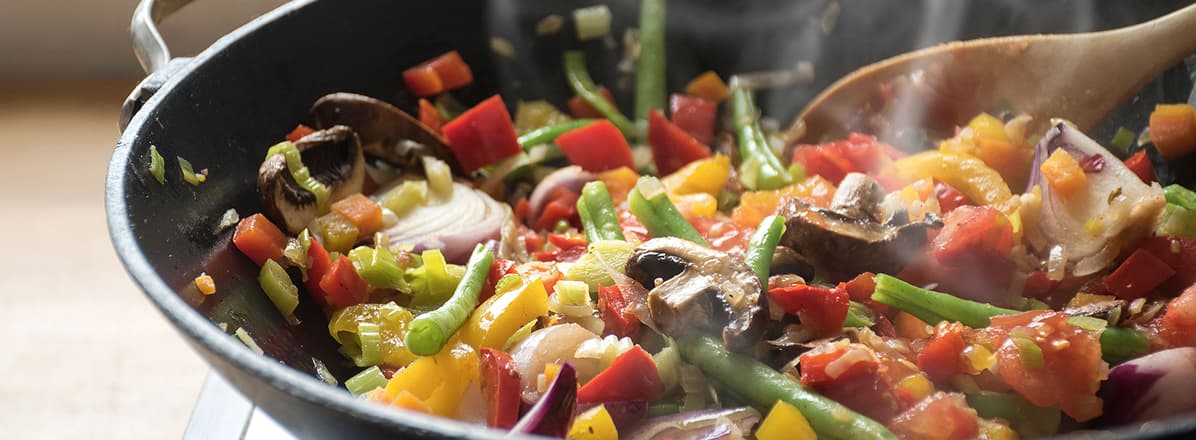
Fresh vegetables are an important part of many authentic recipes. But there’s lots to discover beyond familiar veggies like broccoli, corn and carrots.
Chinese-style recipes introduce a variety of tasty Asian vegetables, such as:
- Shiitake mushrooms for their deep savoury flavour.
- Bamboo shoots for their unique light flavour and texture.
- Snow peas for tender-crisp texture and sweet flavour.
- Water chestnuts. Fresh will add sweet flavour and crunch, while canned adds a texture boost to your dish.
- Bok choy has crunchy stalks and tender leaves, they're also quick to stir-fry.
- Napa cabbage has a mild sweet flavour and variety of uses, depending on the dish. Tip: Clean leafy greens well by soaking them in cool water. Separate each leaf and clean carefully because dirt is often trapped between tight leaves.
Pantry Staples
Pantry Staples
Chinese cooking uses a lot of simple yet flavourful basics to build a dish that’s packed with texture and flavour. Let's look at some commonly used fresh aromatics, vinegars, sauces and seasonings below.
Basic Seasonings & Aromatics
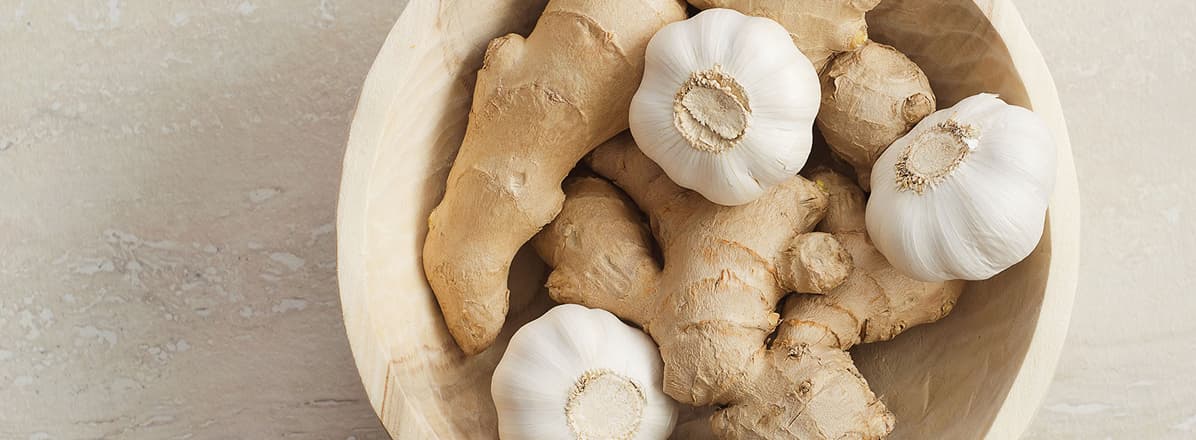
Here are some of the common ingredients used in Chinese-style cooking to build flavour. Including the big three – garlic, ginger and green onions –foundational aromatics of Chinese cooking.
- Garlic. Used to build rich flavour in dishes, often via seasoning cooking oils.
- Fresh ginger. Spicy and warm, it features knobby, uneven, and hard-to-peel roots. To remove skin quickly and easily, use a small spoon to scrape it off. The easiest way to prep fresh ginger for cooking is to grate it on a fine grater, called a rasp. (Tip: leftover grated ginger can be frozen for later use, steeped in hot water for a tea, or added to smoothies for a spicy kick.)
- Green onion. Can also be referred to as scallions or spring onion. Offer a milder, sweet onion flavour, ideal for flavouring oils and beyond.
- Chilies. Build flavour and add a kick to dishes. For a milder dish, use only a pinch of hot pepper flakes. Tip: Small dried or fresh chilies tend to pack a spicier punch and can be used as a final garnish, allowing the spice lovers at the table to season a dish to their taste.
- Dried Mushrooms. Add the same depth and rich flavour, but with a longer shelf life! Just be sure to soak dried mushrooms in water to rehydrate, removing the stems before using (they are tough). Tip: save stems in the freezer to add flavour to soup stock and use any leftover soaking liquid instead of water to add depth of flavour to rice or other grains, or as the base for homemade soups or hot pots.
Sauces and Vinegars
Sauces and Vinegars
- Soy sauce. Used for its savoury and umami flavour; found in recipes and as a condiment on the table.
- Hoisin sauce. A thick, sweet sauce that blends ground beans and spices, and is most often used as a glaze or dipping sauce.
- Rice wine. Made from fermented glutinous rice, in a variety of styles rice wine is used for sweetness and flavour development. Enjoyed as both a drink and cooking ingredient.
- Rice vinegar. Used in marinades, sauces, dressings, its mild acidity offers a sweet and sour flavour profile in cooking.
- Chili garlic sauce. Used for its savoury notes and spicy kick, it’s incredibly versatile and can be used in dips, marinades, oils and broths to enhance flavour.
Common Ingredients
Common Ingredients
Meat & Tofu
Traditional Chinese food often features meat alternatives such as chicken, beef, pork and tofu.
- For best flavour and texture, marinate meat and tofu before cooking. Ingredients like ginger, garlic, lemon juice and soy sauce add flavour, while cornstarch and egg help tenderize meat.
- For more tender meat, slice beef on an angle against the grain. For “shredded” chicken or pork, stack slices of meat and shear off long thin pieces for julienned perfection.
- For extra-firm tofu, cut rectangular slabs and place on a paper towel to draw out moisture.
Rice & Noodles
Versatile and filling. Rice and noodles are a base ingredient that offer texture and carry flavours while building out the carbohydrate component of a dish.
- Rice and noodles are a delicious base for dishes like stir-fries, greens, and soups. Serve medium-grain rice, such as jasmine, with stir-fries. When steamed or boiled, grains stick together, making it easy to scoop up with a fork or chopsticks.
- Hot pots and soups are best served with fresh or dried egg noodles, which absorb the flavours of the broth.
- Cooking rice noodles? They cook much faster than wheat noodles and need just a minute or two in the pot once the water has come to a boil.
Equipment
Equipment
A lot of culinary tools are incredibly versatile! Once you understand how they’re designed to function, you can be empowered to use them in a variety of ways. (Not unlike using a large Dutch oven instead of a 12” frying pan, as a soup and stew pot, roast pan, shallow fryer, or bread oven.)
Wok
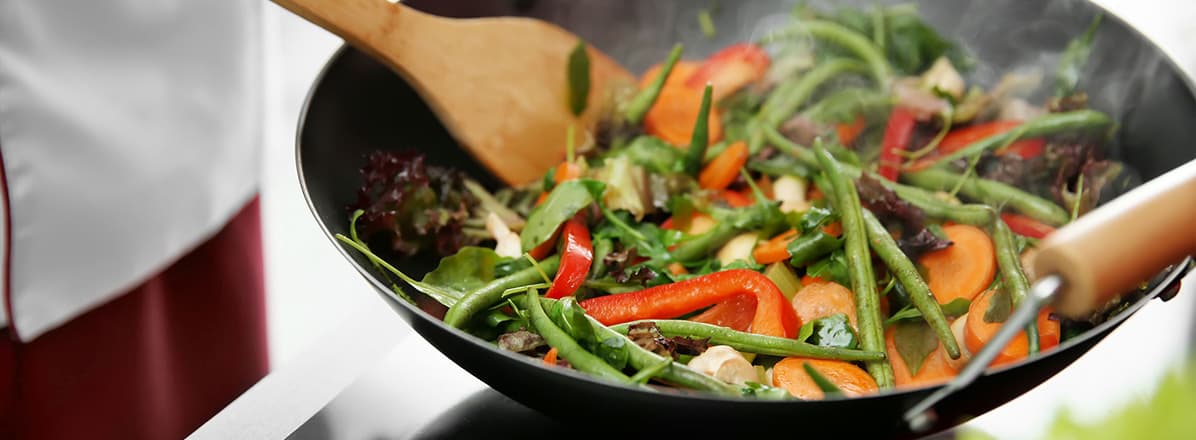
One well-known Chinese cooking technique worth mastering is stir-frying in a wok. This bowl-shaped pan can be heated to high temperatures with a small amount of oil to allow foods to cook quickly and evenly. (The high sides keep everything well-contained while stirring.) The result: vegetables retain their colour and crunch, and meats and tofu stay moist.
- If you don’t have a wok, use a wide, flat-bottomed pan that allows ingredients room to make contact with the heated surface. What’s also important is that you can easily toss and fold different ingredients and not crush them.
- Be ready ahead of time. Stir-frying goes very quickly, so before you start cooking, prep your ingredients, chop them into uniform sizes for even cooking.
- Don’t start until the wok is really hot. To test, drip water onto the wok. If the water immediately evaporates, the wok is ready for cooking to begin.
Bamboo Steamer
Bamboo steamers are another kitchen staple. They evenly distribute steam, allowing you to quickly and gently cook your food. These steam baskets are also designed to stack, allowing you to cook multiple ingredients at the same time.
- Longer to shorter cook times for ingredients dictates which steamer basket you use. Proteins like meats and fish need longer to cook and should be in the basket closest to the steaming water. Ingredients that need less time, like vegetables, go in a higher basket, and take less time to cook overall.
- You don’t have to steam with water! If you want to infuse extra flavour into your food, use a flavourful broth.
- Line the baskets. Parchment paper, cabbage leaves and corn husks all work. (As do other leaves, like banana or pandan, if you have them.)
Mandoline Slicer
The mandoline is one of the sharpest tools you can have in your kitchen toolbox, and you don’t need expert knife skills to benefit. (But do use the hand guard for safety!) It’s a rapid-results workhorse, perfectly slicing the most wafer-thin slices to evenly slimmed out matchsticks. Your next stir fry will thank you.